Why I think military associations outgrow WordPress and spreadsheets
Nikos Katsikanis - March 19, 2026
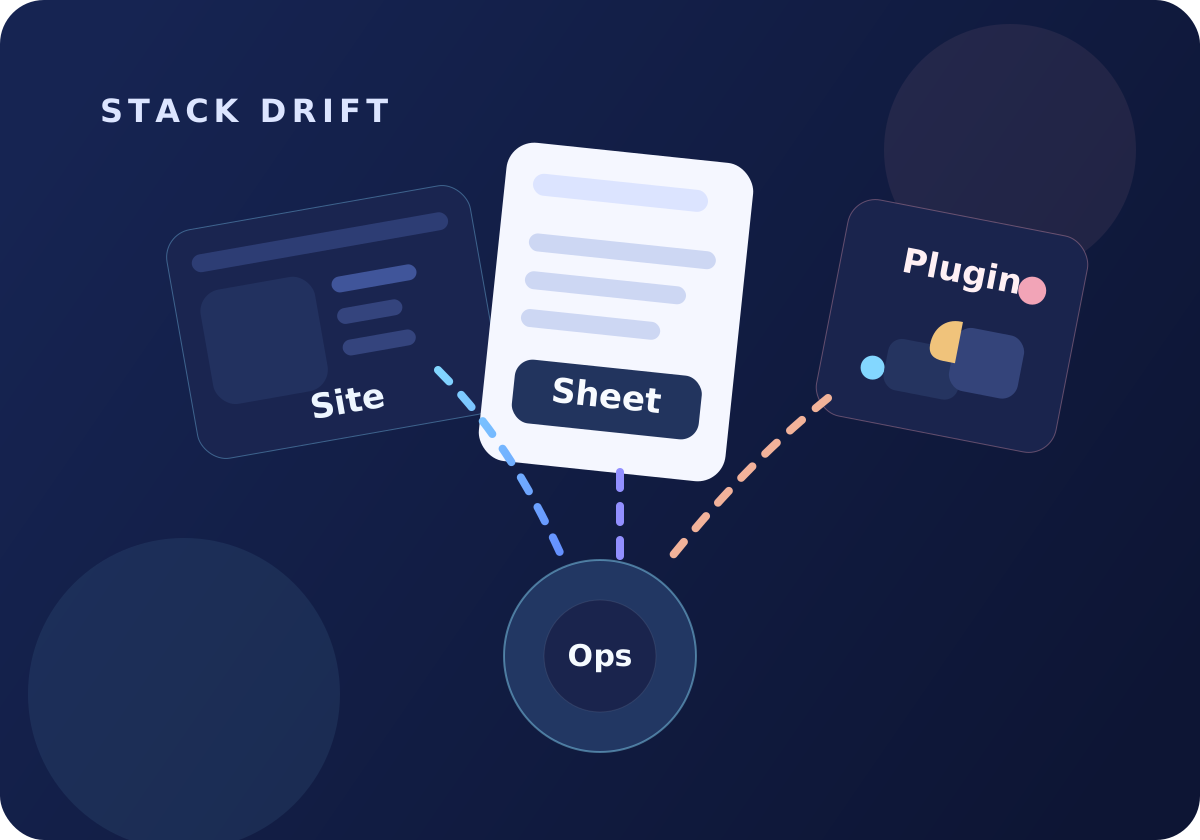
I do not think military associations outgrow WordPress because publishing content is hard. I think they outgrow it because the real operational work sits outside the website in spreadsheets, ticketing tools, inbox threads, extermal sass systems and manual admin processes.
The website is rarely the real problem
With associations, the complaint often starts with the website. The site is slow, awkward to update, or scattered across too many plugins. But once you look closer, the real issue is usually operational sprawl.
Membership lists live in one place, chapter records in another, event management somewhere else, and awards or scholarships in a collection of forms and spreadsheets. The website ends up acting like a thin public shell on top of disconnected admin work.
WordPress is not always wrong, but it stops fitting
I am not arguing that WordPress is useless. It is fine when the main job is publishing pages and news updates. The problem comes when the organisation needs the platform to handle operations as well as content.
Military and professional associations often need more than a content site. They need membership workflows, chapter structures, event ticketing, awards, scholarships, internal admin tools, and role-based permissions that reflect how the organisation actually works. That is where I find WordPress plus plugins starts to bend into something it was not really built for.
Spreadsheets become the hidden database
The bigger issue, in my experience, is not WordPress by itself. It is the spreadsheet layer that grows around it. Once key processes live in spreadsheets, the organisation starts depending on manual reconciliations, copied data, and a lot of tribal knowledge.
That creates slow admin work, duplicate effort, and avoidable mistakes. It also means the most important operational logic is not really in the platform at all. It is in the heads of the people who know which sheet to open, which email to search for, and which manual workaround to apply.
This gets worse when volunteers and part time leaders are involved
Many of the associations I work with rely on volunteers, part time board members, or officers with limited spare time. I wrote more about that operating reality in Working with nonprofits as an IT supplier. When the system is fragmented, those people spend their energy chasing process instead of supporting members.
I think that is one of the strongest reasons to replace the stack. A more unified platform reduces the amount of remembering, checking, and hand-carrying people need to do just to keep routine operations moving.
What I prefer instead
I prefer a platform that treats the association as an operational system, not just a marketing site. That means membership, chapters, events, awards, scholarships, and admin workflows are part of one coherent application, ideally running in the client's own AWS account.
That is the model I describe on my professional associations page. I do not think every association needs a giant custom rebuild immediately, but I do think many of them benefit from moving core operations into a system that actually reflects the business.
I would usually replace it in phases
I would not normally tell an association to rip everything out in one go. That is usually a bad commercial decision. I prefer to replace the painful workflows in phases, starting with the areas where spreadsheets and disconnected tools cause the most friction.
That might mean membership first. It might mean events and ticketing first. It might mean awards or scholarship administration first. The point is to start where the operational pain is highest and build toward a more coherent platform over time.
What I think associations are really buying
I do not think associations are mainly buying a prettier website. I think they are buying reliability, lower admin overhead, better member experience, and a platform that does not depend on a pile of fragile workarounds.
That is why I think many military associations eventually outgrow WordPress and spreadsheets. The issue is not fashion. The issue is operational fit.