How I would build chapter management for a military association
Nikos Katsikanis - March 25, 2026
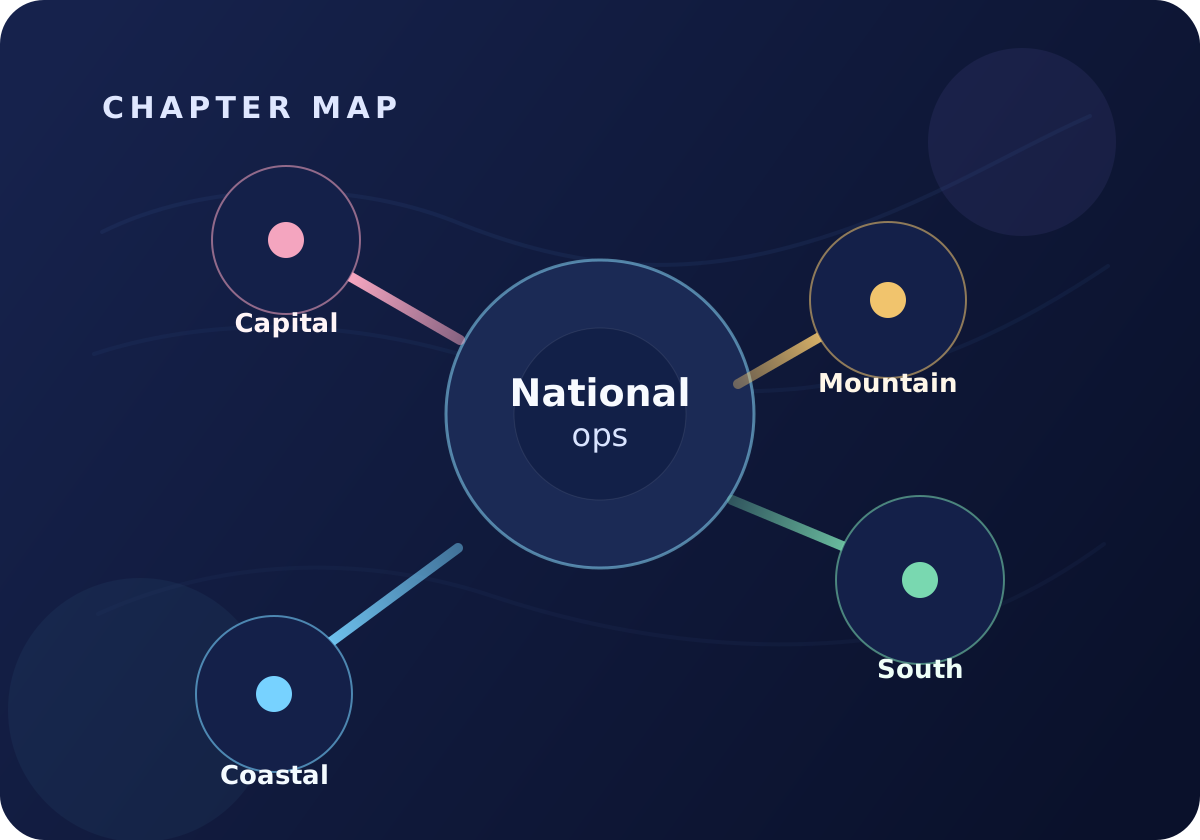
When I think about chapter management for a military association, I do not start with pages or content. I start with structure. Chapters need the right people, the right permissions, the right reporting, and a platform that still makes sense when the organisation grows.
I would treat chapters as first-class records
I would not hide chapters behind a loose content model or a stack of manual admin rules. I would give each chapter its own real record, with a name, region, status, local admins, and relationships back to the broader association.
That matters because chapter life is operational. It is not just a list of locations. It affects renewals, events, communications, permissions, leadership reporting, and member experience.
I would keep the data model simple but strict
For chapter management, I would want a clean relational model. A member can belong to one or more chapters depending on the association's rules. A chapter has admins. A chapter has activity. A chapter can be active, inactive, or archived. The system should understand those states instead of treating them like labels on a page.
That is where I think structure pays off. When the rules are clear in the model, the rest of the system becomes easier to maintain and easier to explain.
I would separate national and chapter permissions
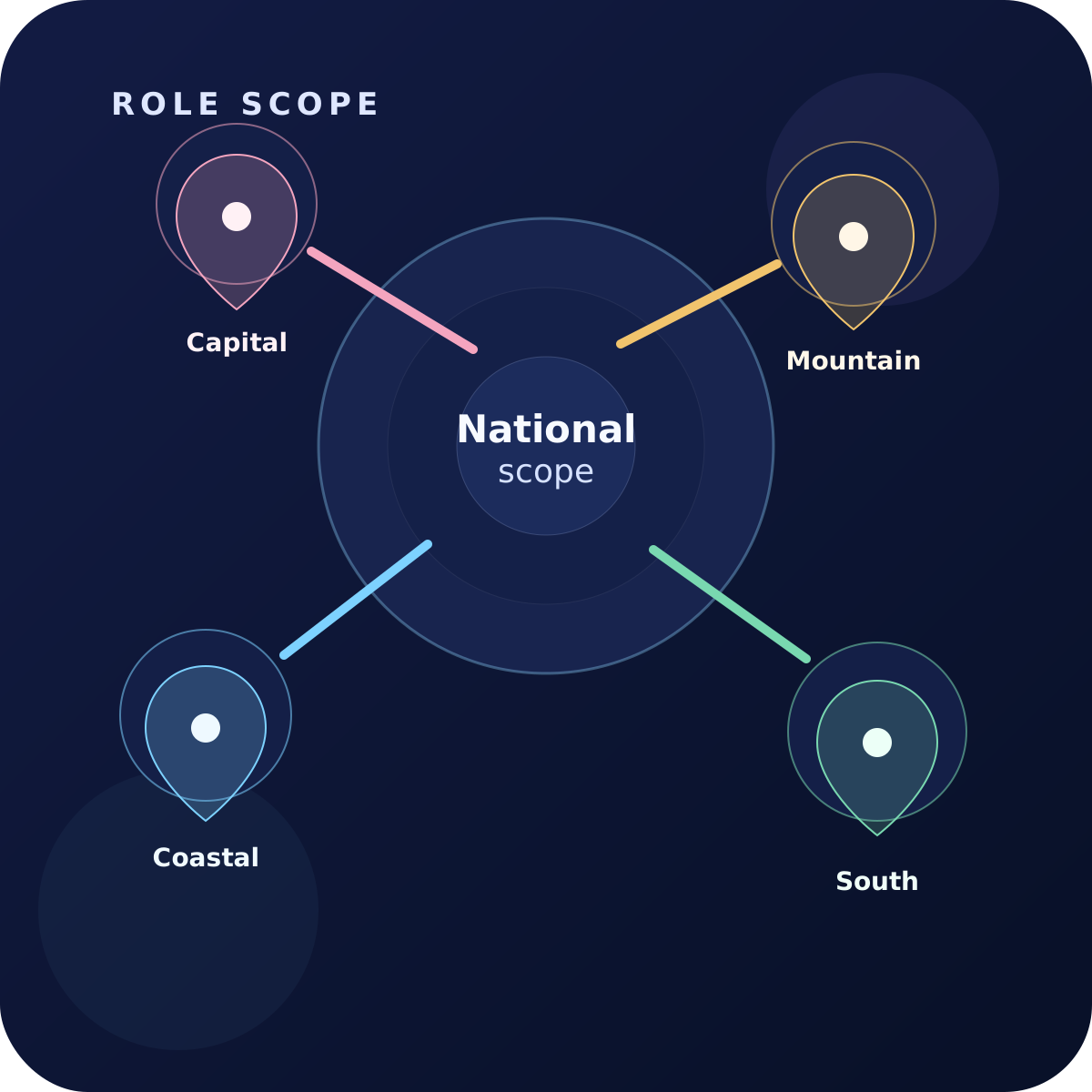
One of the first things I would design carefully is permissions. National staff and chapter admins do not need the same level of access. I would want a role model that makes it obvious who can edit what, who can approve what, and who can only see their local area.
I think that is the difference between a platform that feels controlled and a platform that turns into a pile of shared logins and workaround habits.
I would make chapter reporting easy
If I were building this for a military association, I would expect leadership to ask questions like: which chapters are active, which ones are growing, which chapters need support, and which local admins are current. I would not want those answers trapped in spreadsheets.
I would build the reporting around the chapter model itself so the association can see the health of the network without reconstructing it manually every month.
I would connect chapters to events and membership
Chapters should not exist in isolation. I would link them to members, events, awards, and communications so the association can see the full picture. If a chapter runs an event, that event should tie back to the chapter. If a member changes chapter, that history should stay visible.
That is the kind of detail that keeps the platform useful as the organisation grows.
I would keep the admin experience practical
Most chapter admins are not trying to learn software. They are trying to run their chapter. I would keep the interface focused on the handful of tasks they actually need: updating chapter details, managing members, viewing event history, and checking local reporting.
If I were designing it properly, I would make sure the UI feels calm, not clever.
I would build it to survive turnover
Chapter leadership changes. Volunteers rotate. People leave and new people inherit the work. I would want the software to be clear enough that the next person can step in without needing oral history just to figure out the basics.
That is why I think chapter management is a good test of whether an association platform is actually well built.
On my professional associations page, I talk about the broader platform work I do for military and professional associations. Chapter management is one of the clearest places where that work becomes real.