Why I usually pick SQL over NoSQL for military associations
Nikos Katsikanis - March 24, 2026
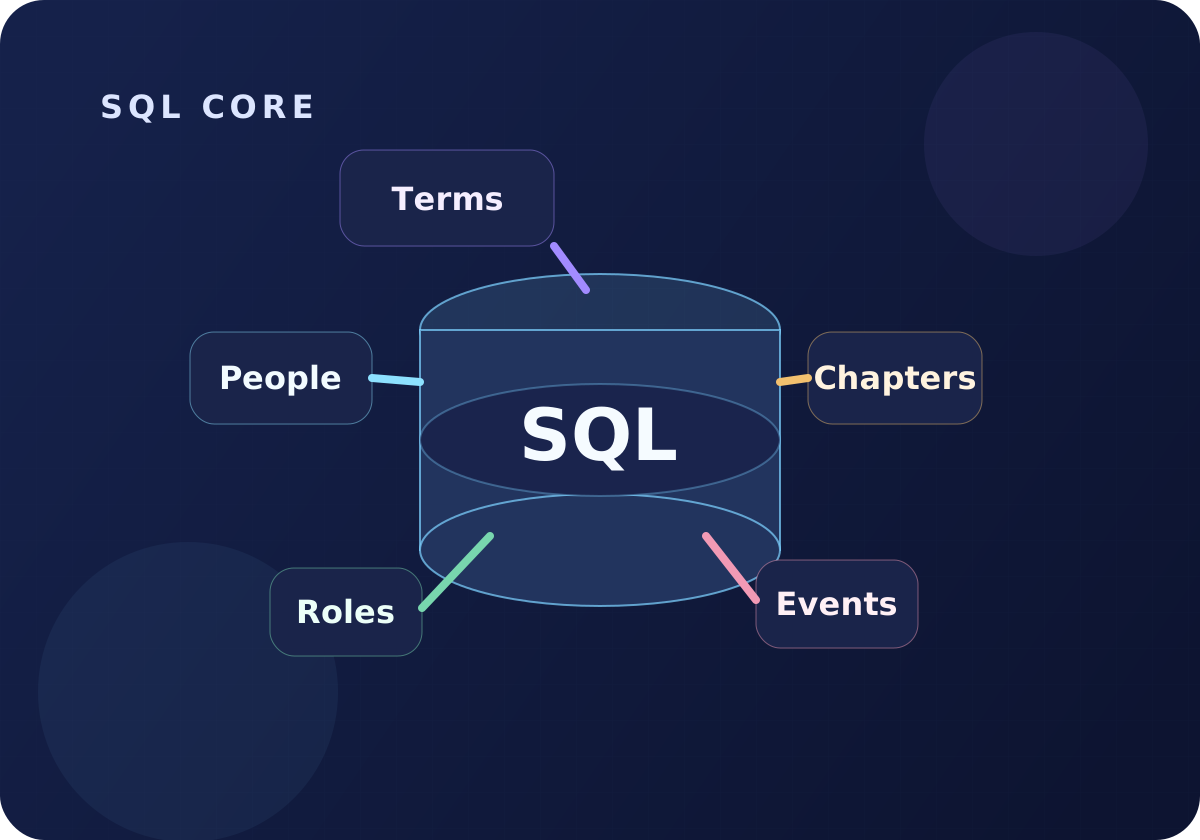
When I build systems for military associations, I usually reach for SQL first. Member records, chapter roles, renewals, awards, and reporting all lean on relationships and rules, not loose document storage.
I do not see this as a fashion argument
I hear people talk about SQL versus NoSQL like they are picking between old and new. I do not find that useful. When I am building for a military or professional association, I am not trying to look modern. I am trying to choose the database that gives me the cleanest source of truth.
That matters because association software is full of records that relate to each other. Members, memberships, chapters, roles, awards, scholarships, events, payments, and reporting all connect. If those records drift apart, the software starts telling the organisation the wrong story about itself.
The core records are relational
If I am building for an association, I know I will need answers to questions like: who belongs to which chapter, who renewed, who lapsed, who can administer what, who received an award, and what changed over time.
That is relational work. I want joins, constraints, and foreign keys. I want the schema to reflect the way the association actually runs instead of leaving all the important rules scattered through application code.
I want the database to defend the rules
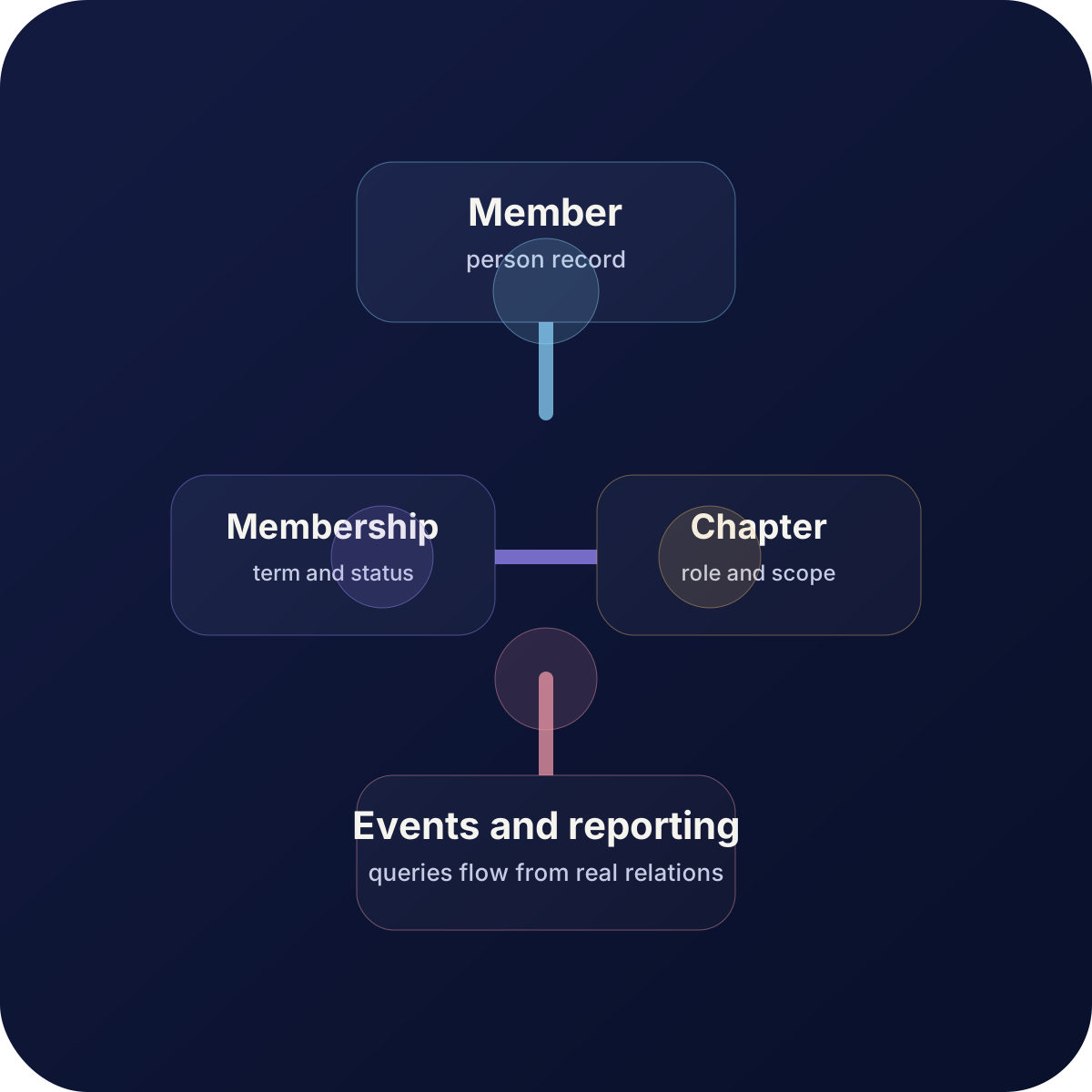
One reason I usually prefer PostgreSQL here is simple. I want the database to help keep the records honest. If the association changes staff, rotates volunteers, imports old data, or adds new workflows, I still want the core rules enforced.
- Only valid members should hold member-only roles.
- Role assignments should point to real people and real chapters.
- Award records should attach to valid members.
- Status values should stay within a known set.
- Membership history should remain queryable over time.
I can enforce those rules in application code alone, but I would rather not rely on discipline when the database can carry part of that load for me.
Reporting is part of the job
Associations constantly need operational answers. How many active members does each chapter have? Who renewed this quarter? Which memberships expire next month? Which chapter admins are no longer current? Those are not unusual requests. That is normal day to day work.
SQL fits that naturally. With a solid relational schema, reporting feels like part of the product. With a loosely structured primary store, it often turns into extra application logic, duplicated views, or cleanup work later.
I still see real uses for NoSQL
I am not anti NoSQL. I just do not like making it the main system of record by default for association operations. I think it earns its keep much more often in supporting roles.
- Caching derived views.
- Session or token storage.
- Flexible event logs.
- Semi-structured external data.
- Queues, streams, and notification pipelines.
Those are all sensible reasons to bring in NoSQL. That is very different from letting it own the member and membership records.
I care about continuity more than flexibility
Military and professional associations usually do not have huge engineering teams. The system has to stay understandable, and it has to survive leadership changes, volunteer turnover, and years of accumulated history.
That is why I keep coming back to structure. In Why I think military associations outgrow WordPress and spreadsheets, I wrote about fragmented tools and operational sprawl. I see the same thing at the data layer. I want one dependable source of truth for the records that matter.
My default posture is simple
I usually put members, memberships, chapters, permissions, events, awards, and scholarships in SQL. If I later need caching, logs, streams, or a specialised high-scale subsystem, I will add NoSQL where it clearly helps.
For association platforms, structure is not bureaucracy. It is what helps the organisation stay legible to itself five years later.