The Hidden Admin Cost of Running an Association Across WordPress, Spreadsheets, and Plugins
Nikos Katsikanis - April 4, 2026
Associations rarely pick the wrong tools on day one. They outgrow the easy ones. A website, a spreadsheet, a payment workaround, and a membership plugin can look fine at first. The admin cost shows up later.
What starts as convenience turns into reconciliation
Most military and professional associations do not begin with a giant platform. They begin with the easiest stack they can afford to put in place. A WordPress site, one or two plugins, some spreadsheets, a payment workaround, maybe an event tool, and a lot of inbox coordination.
That can work for a while. Then renewals, chapters, roles, events, sponsor relationships, and reporting start colliding. The system no longer reflects the association. It reflects the patch history.
What breaks first is usually not the public website
The pain often gets blamed on the site because that is the visible part. But the first serious breakdown is usually in operations.
- Members and memberships get mixed together.
- Chapter data drifts between national and local records.
- Sponsors, exhibitors, and partners are tracked manually.
- Events, ticketing, seating, and payments live in separate systems.
- Routine admin work depends on inboxes, spreadsheets, and memory.
- Reporting becomes hard to trust fully.
None of that feels dramatic on its own. Together it creates a constant background tax on the people keeping the association running.
This is not only a software problem
I do not think the real issue is just “bad software.” The deeper problem is that associations have layered responsibilities and recurring operational processes that simple tools do not model well.
There is usually a national layer, a local chapter layer, historical member status, role changes, recurring events, finance workflows, and a lot of coordination between staff, volunteers, and officers. Those are record problems, not just page and form problems.
Patching tools together increases admin burden quietly
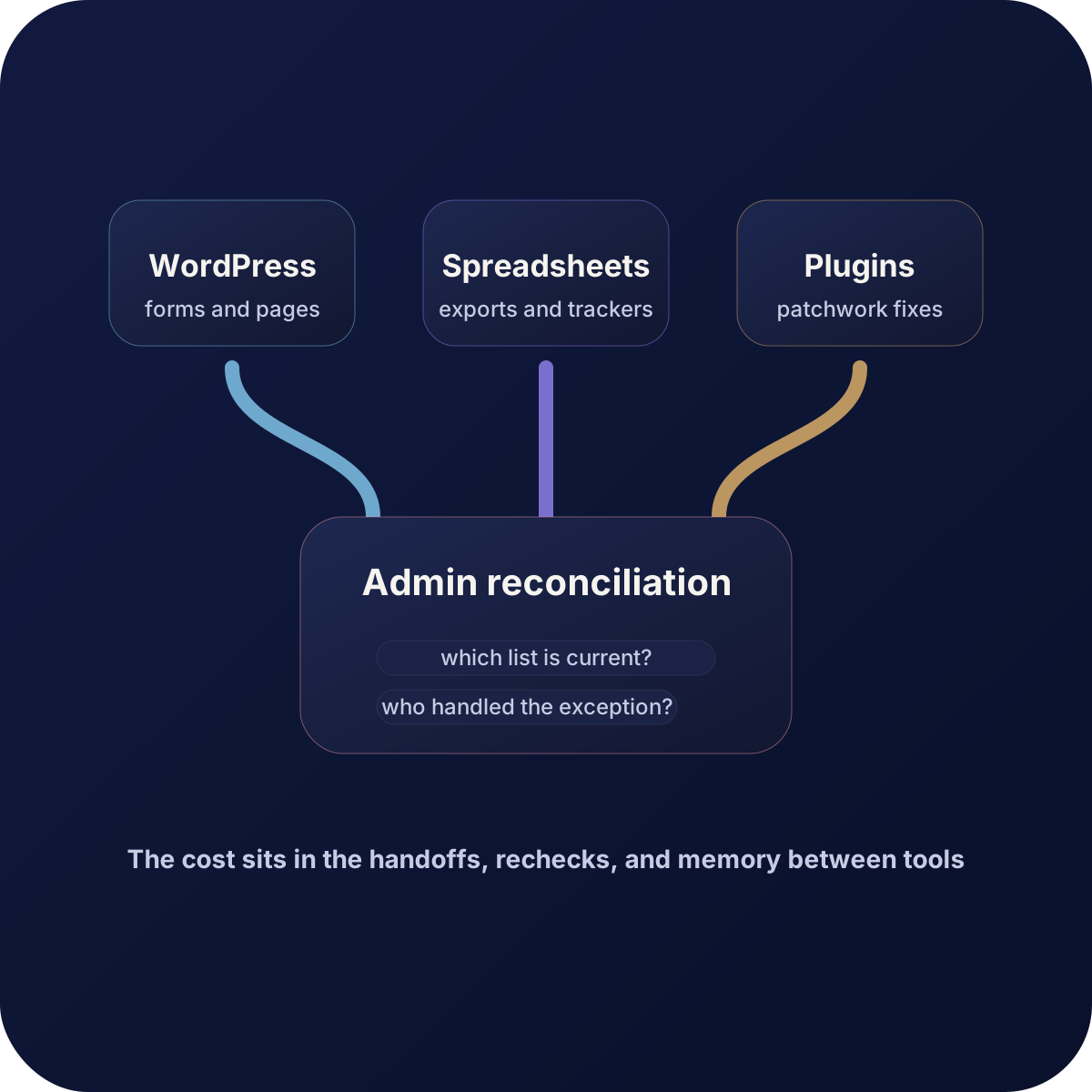
Every extra plugin or spreadsheet can look harmless because it solves one immediate need. The hidden cost shows up in the space between tools.
Someone has to reconcile exports. Someone has to check whether the spreadsheet or the plugin is current. Someone has to know which chapter list is the real one. Someone has to remember why a billing exception was handled manually last quarter. That is where the operational cost sits.
I touched the broader WordPress and spreadsheet problem in Why I think military associations outgrow WordPress and spreadsheets. The point here is narrower: fragmentation makes admin work expensive even when each individual tool still “works.”
Tribal knowledge becomes part of the system
When the operating model lives across disconnected tools, the organisation starts depending on the people who know how to navigate the mess. The system becomes software plus memory plus workaround habits.
That is risky in any organisation, but it is especially costly in associations where staff turns over, volunteers rotate, and chapter leadership changes. The next person inherits process without inheriting a coherent system.
A better model is operational, not patch-based
The goal is not more software. The goal is a system that reflects how the association actually works.
- Keep member records separate from membership terms and history.
- Treat chapters as first-class records, not loose labels.
- Keep sponsors, exhibitors, and partners as real organisations.
- Give staff and volunteers practical workspaces instead of a pile of plugins.
- Make reporting flow from the operating model instead of manual reconciliation.
That is the product direction I show on the Military OS page, and it is the service model behind my professional associations work. I do not see associations as content sites with some admin attached. I see them as operating systems with a member-facing layer on top.
The cost you are trying to remove is admin drag
When associations outgrow WordPress, spreadsheets, and plugins, the biggest cost is not usually licensing. It is the admin drag: duplicated effort, slower turnaround, unclear ownership, messy handoffs, and reporting no one fully trusts.
That is why the answer is not another patch. It is a more structured operating model.